What is this machine used for?
Tiezheng vertical lathes are reviewed for turning round, disc, ring and flange-type workpieces where vertical loading, part diameter, fixture stability and machining sequence drive machine selection. Buyers should compare the part drawing, material, blank condition, tolerance, loading method and required operations before choosing a TY or related vertical-lathe series.
When should a buyer consider a vertical lathe?
A vertical lathe is a practical route when a rotational workpiece is easier to load, locate and support with its main axis vertical. The decision should be based on the complete part drawing and process plan, not on diameter alone. Buyers should compare workholding, tool access, chip flow, loading safety, inspection needs and any secondary drilling or milling operations.
What verified machine evidence is available?
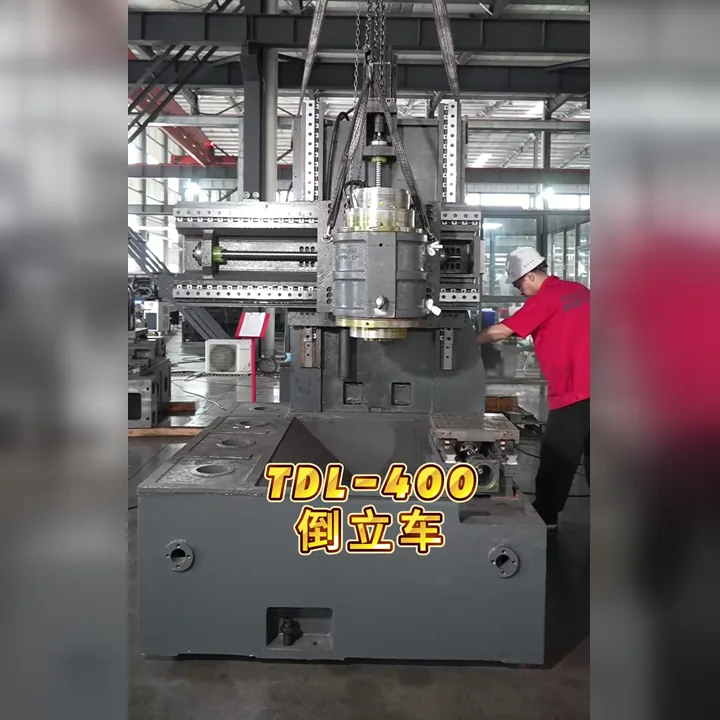
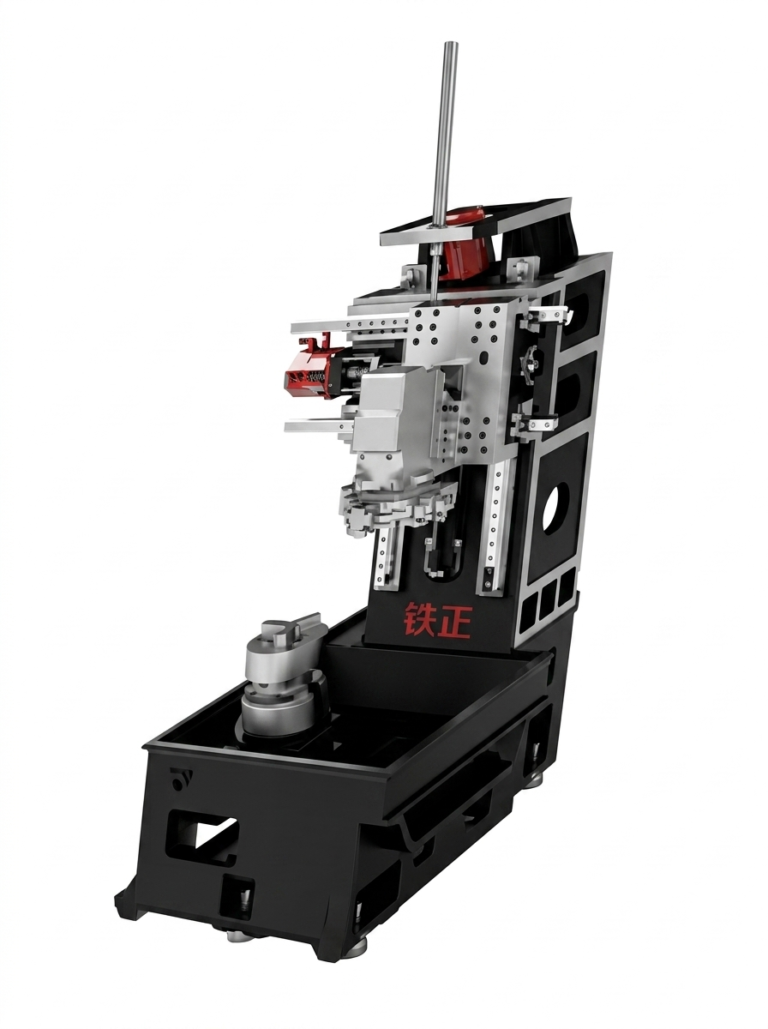
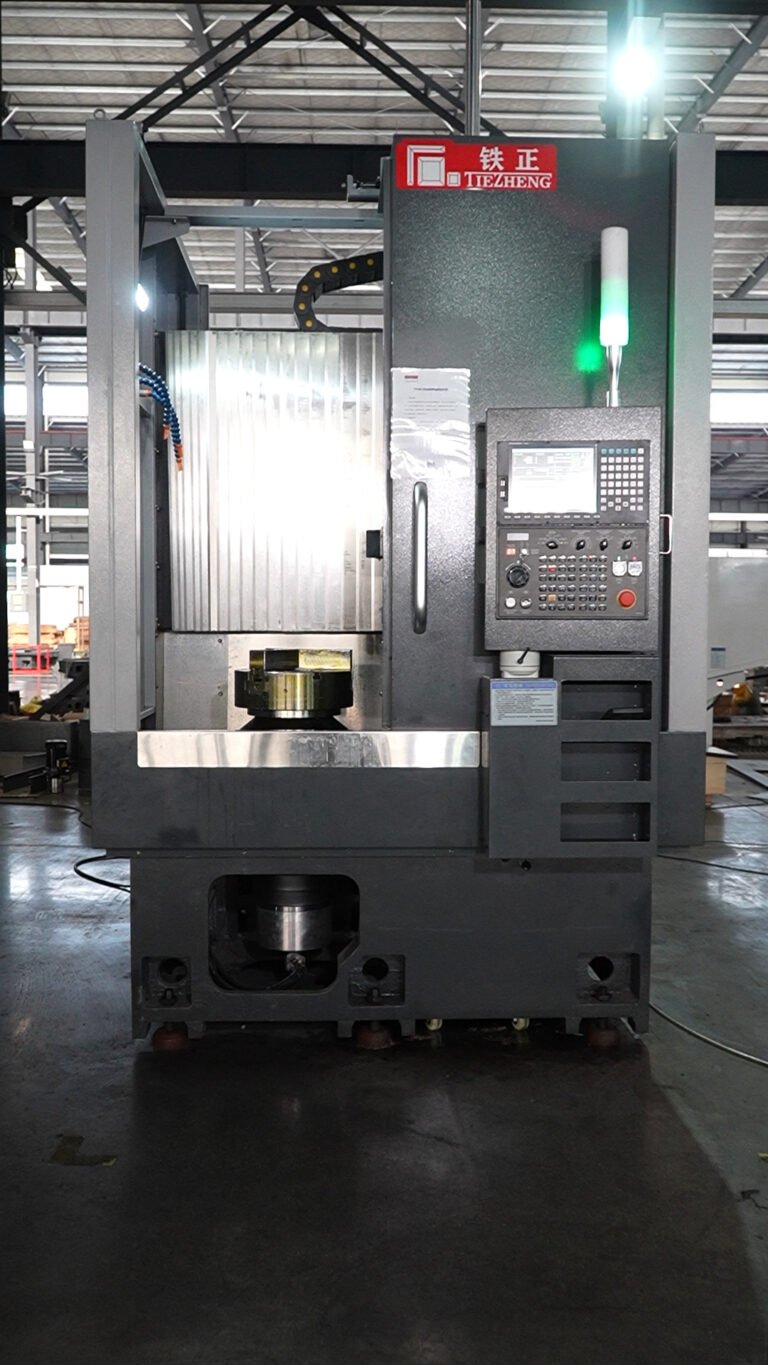
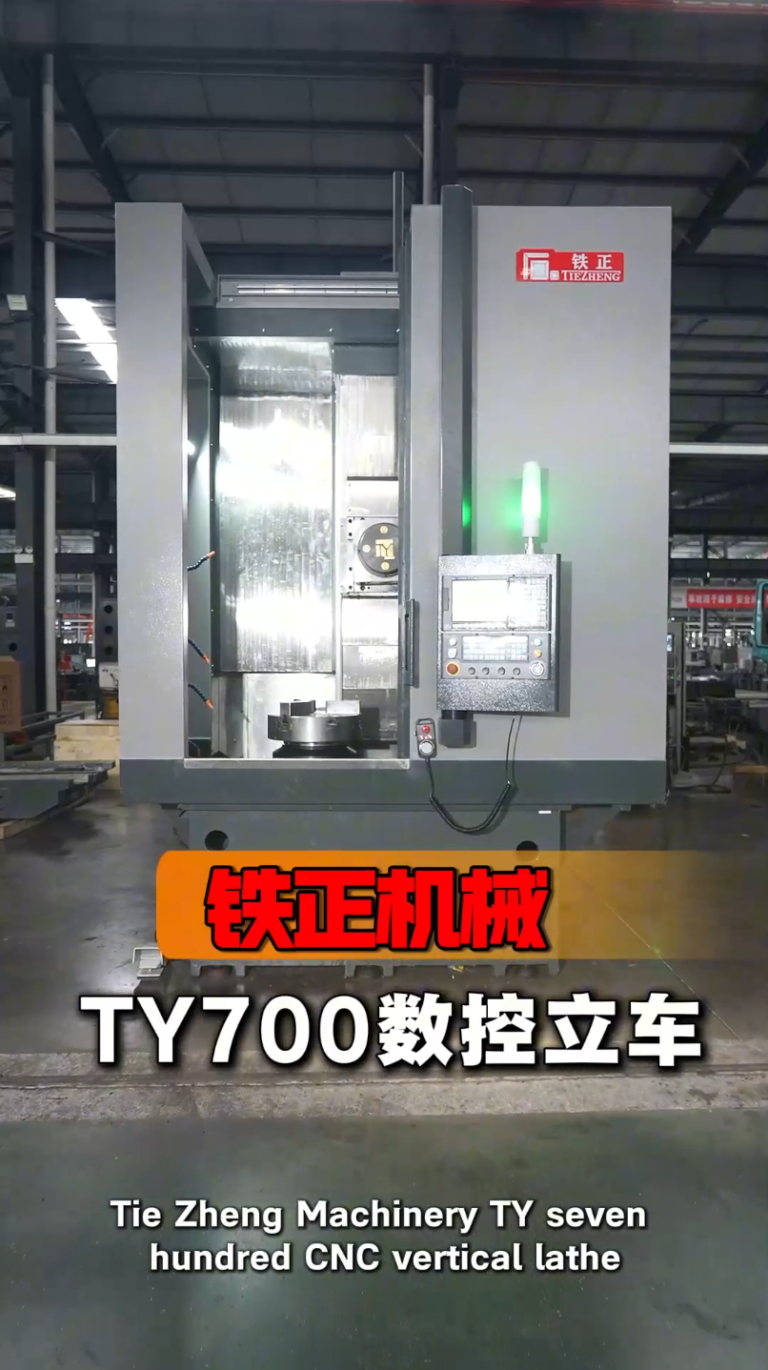
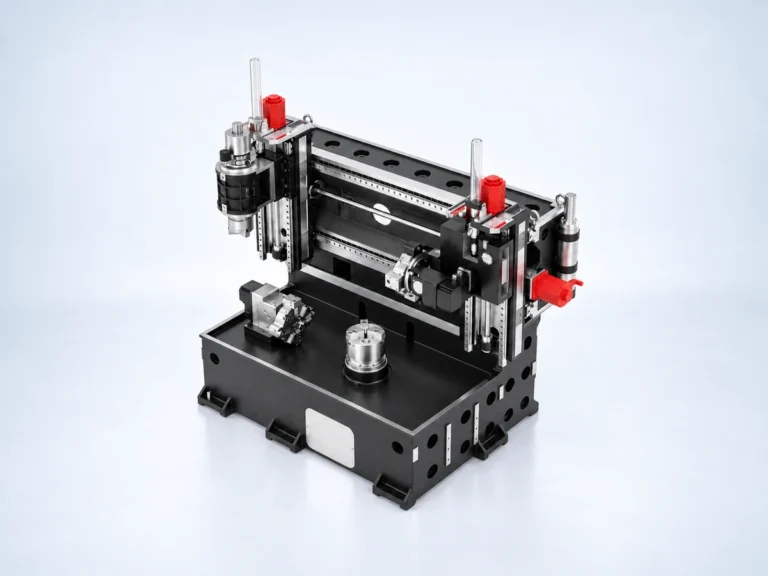
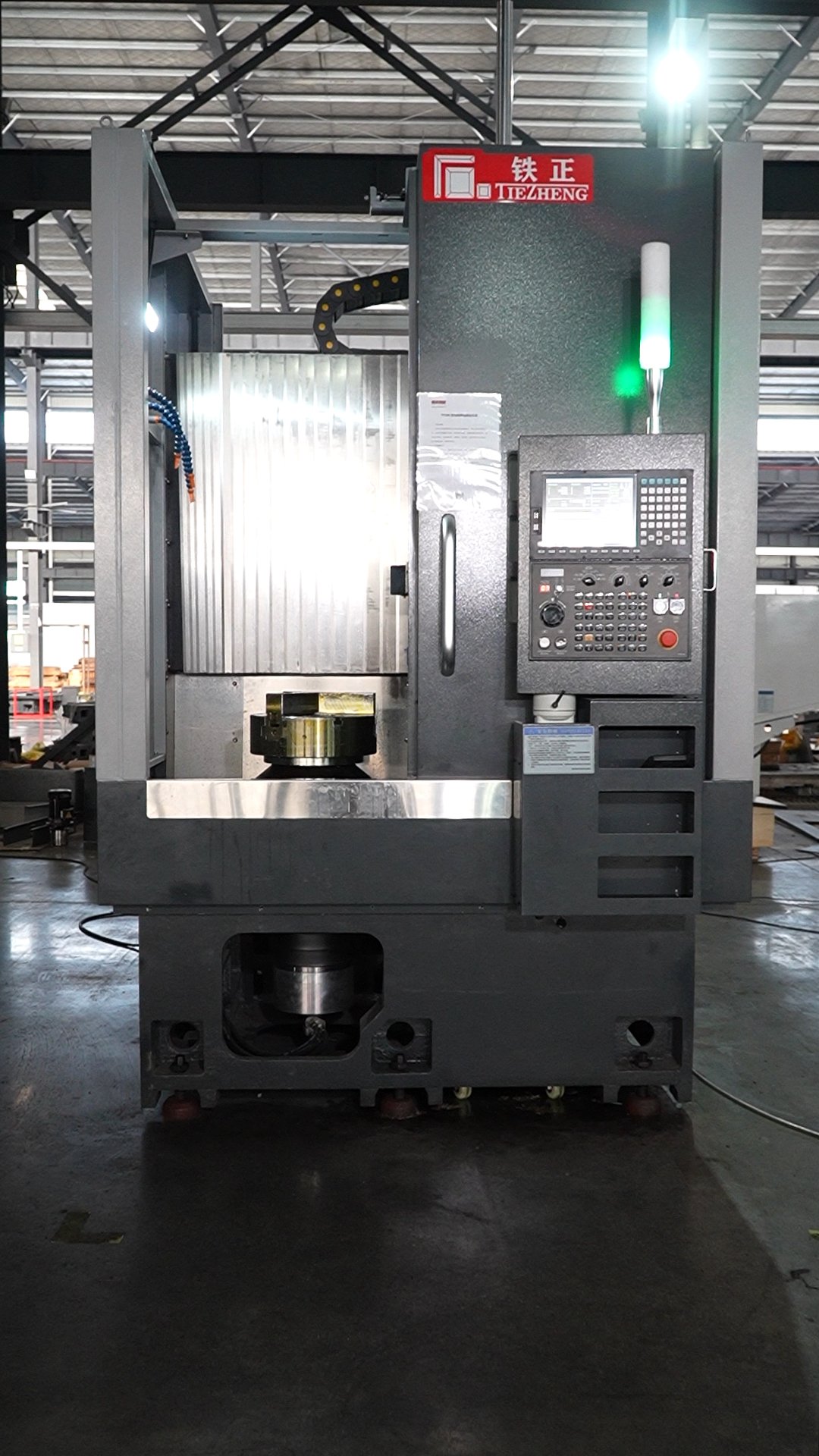
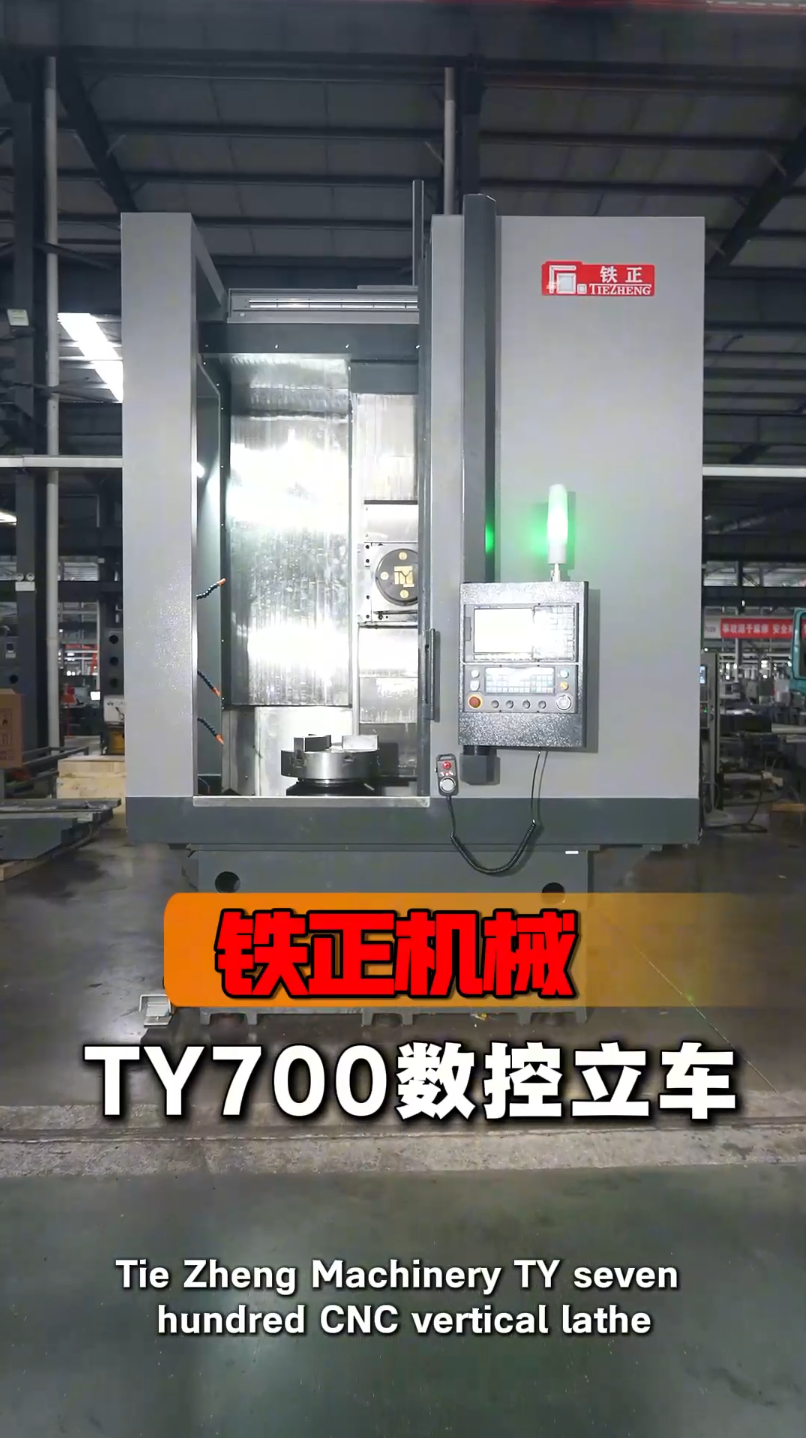
The photos below show Tiezheng machine layouts, guarding and workshop context. They do not by themselves prove exact travel, spindle performance, accuracy, production rate or certificate scope.
How should vertical-lathe models be compared?
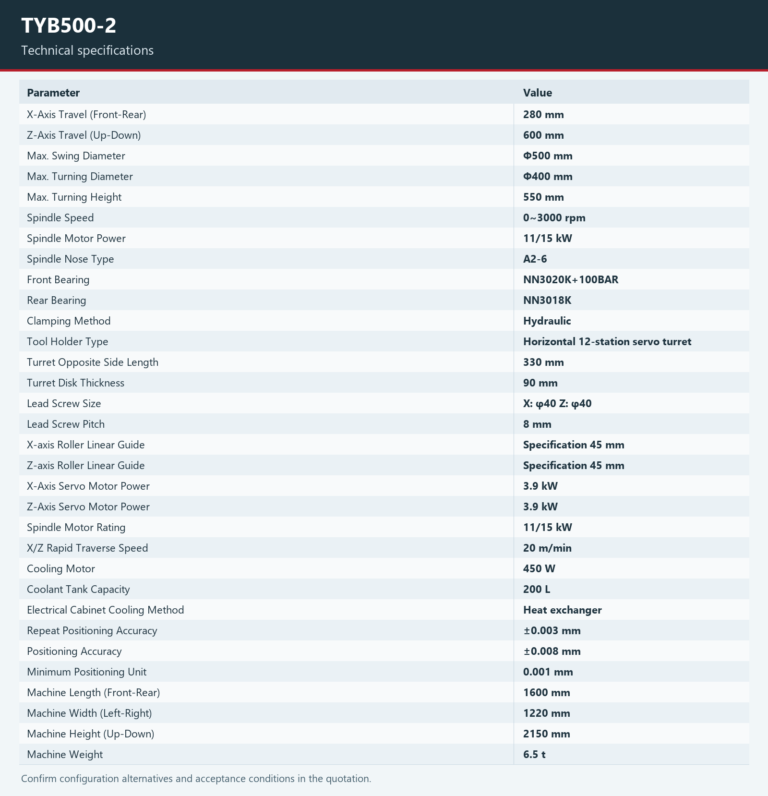
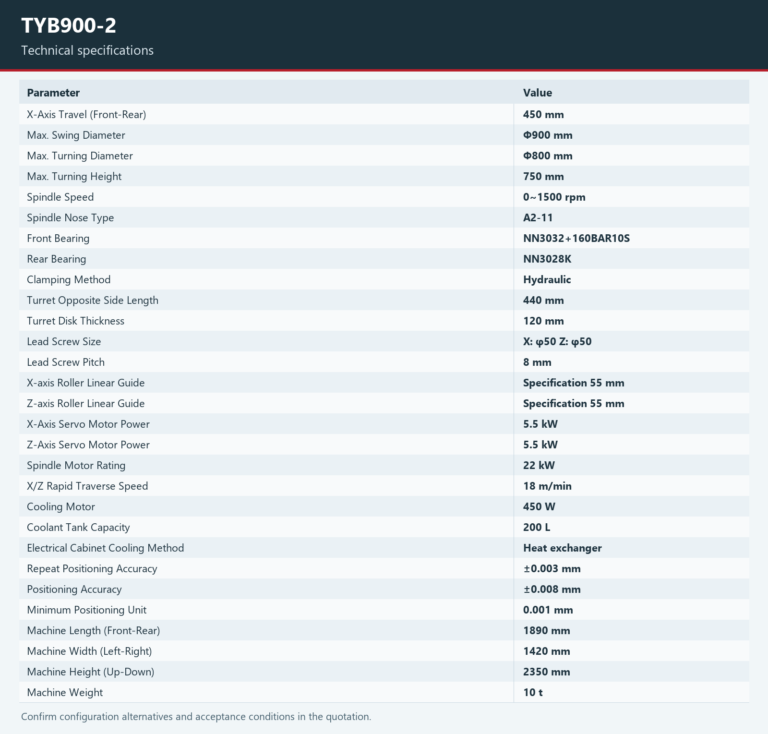
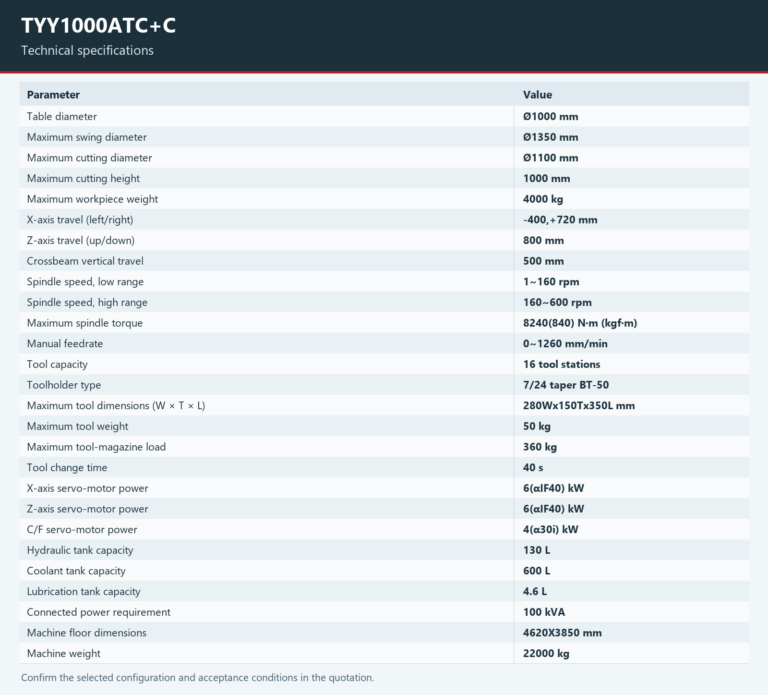
Start from the workpiece and operation route. Open the available model pages below to compare their published turning diameters, cutting heights, workpiece loads and configurations. These are separate limits; the drawing, fixture, tooling and loading plan still require review.
| Buyer input | Why it matters |
|---|---|
| Outside and inside diameters, height and weight | Defines the required work envelope, loading method and workholding review. |
| Material, hardness and blank condition | Changes tooling, cutting load, chip control and process planning. |
| Tolerance and surface requirement | Sets the engineering and acceptance-test discussion. |
| Operation list and tool access | Determines whether turning alone is sufficient or compound operations need review. |
| Annual volume and target cycle time | Guides loading, workholding and automation scope without promising an unverified output rate. |
Which videos help with the first technical review?
These verified media files provide machine, operation and installation context. They are linked directly to keep the page lightweight; buyers can review the evidence before sending drawings.
- TY400 vertical lathe product video – visible machine layout and operating context.
- TY500 CNC vertical lathe demo – visual reference for the machine and machining discussion.
- TY700 installation and assembly workshop video – physical handling, assembly and setup context.
What should be included in a vertical-lathe RFQ?
- Part drawing, dimensions, weight, material grade and blank condition.
- Required turning, grooving, drilling, milling or other operations.
- Tolerance, surface requirement and proposed inspection method.
- Workholding concept, loading method, annual volume and target cycle time.
- Destination country, preferred CNC control and acceptance-test expectations.
Use the RFQ checklist to prepare technical inputs, then send the project to Tiezheng. Buyers who are still comparing routes can start from the machine selector or return to the machine category hub.
How are service and compliance questions handled?
Service scope, installation planning and documentation depend on the selected model, destination and contract. Review the public service and support boundary and the certificate resource policy. A certificate page is a due-diligence resource, not a blanket compliance claim for every vertical-lathe configuration.
How do I narrow the choice for a disc, flange or ring?
Start with the outside and inside diameters, cutting height, total part-and-fixture weight and required operations. Compare each model’s published limits separately; table diameter and axis travel do not by themselves confirm workpiece fit. For turning plus drilling or milling, review the exact turn-mill configuration and tool access.
Describe your part and compare up to three models
Buyer questions before model selection
For disc and flange turning, does TY1200 support a heavier workpiece than TY1000?
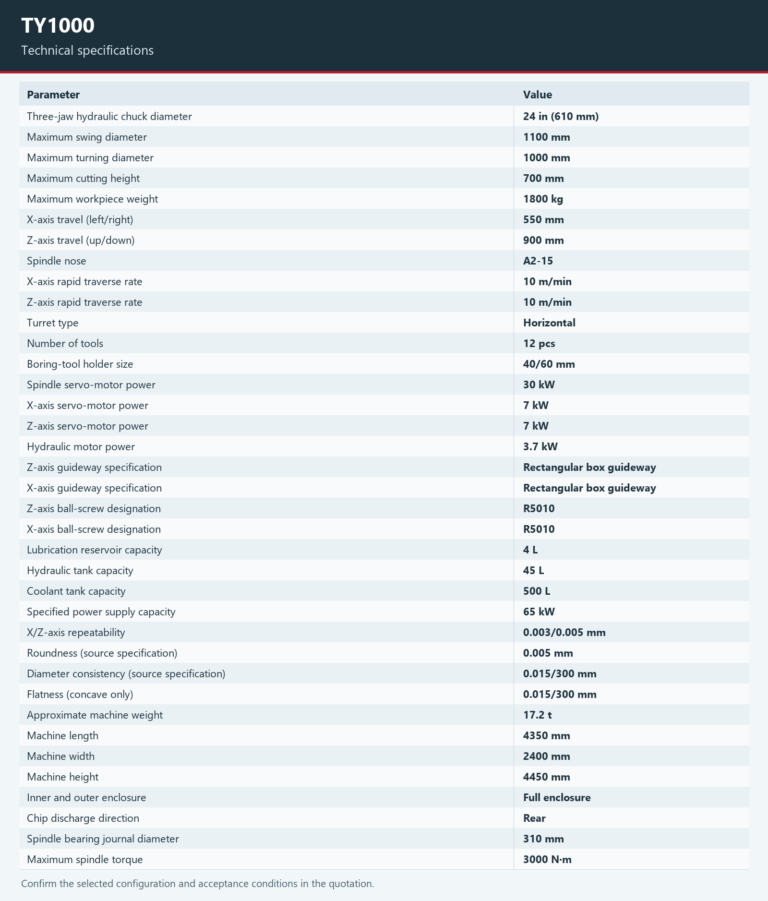
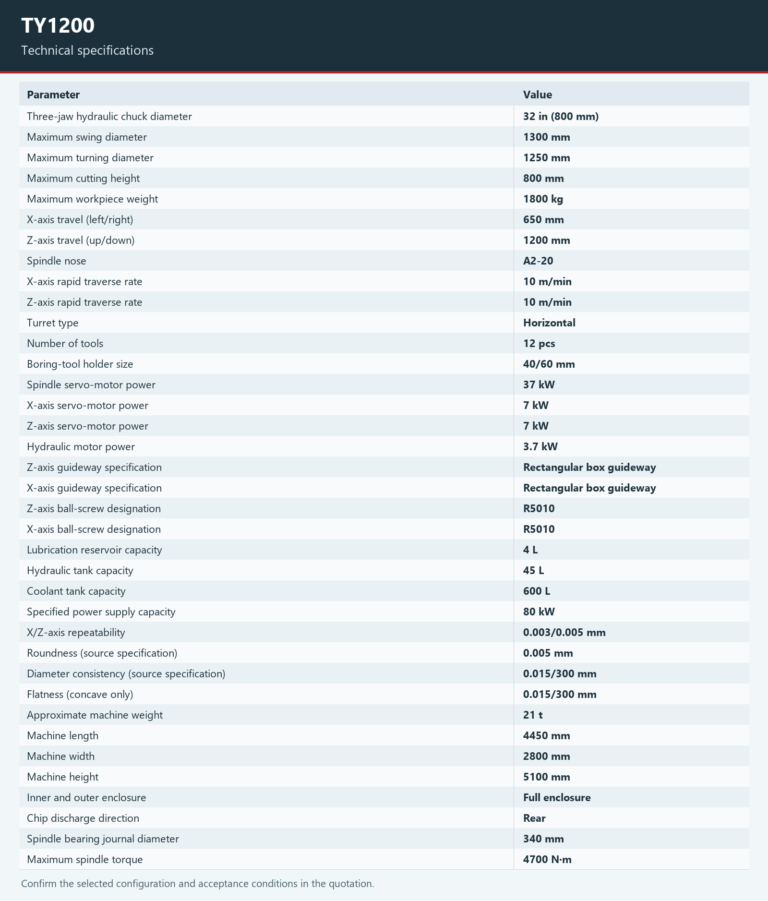
No. Both TY1000 and TY1200 list a maximum workpiece weight of 1800 kg. TY1200 lists a larger maximum turning diameter (1250 versus 1000 mm) and maximum cutting height (800 versus 700 mm). Compare these separate limits with the part and fixture; a larger diameter does not establish a higher weight limit.
| Model | Maximum turning diameter (mm) | Maximum cutting height (mm) | Maximum workpiece weight (kg) |
|---|---|---|---|
| TY1000 | 1000 | 700 | 1800 |
| TY1200 | 1250 | 800 | 1800 |
These are separate limits, not a guaranteed simultaneous workpiece envelope. Confirm chuck and fixture clearance, tool access, material and the required operations. For drilling or milling as well as turning, review the exact turn-mill configuration. Start with the part dimensions and operations you know; a drawing is optional for the first inquiry.
Can the images be used as final technical specifications?
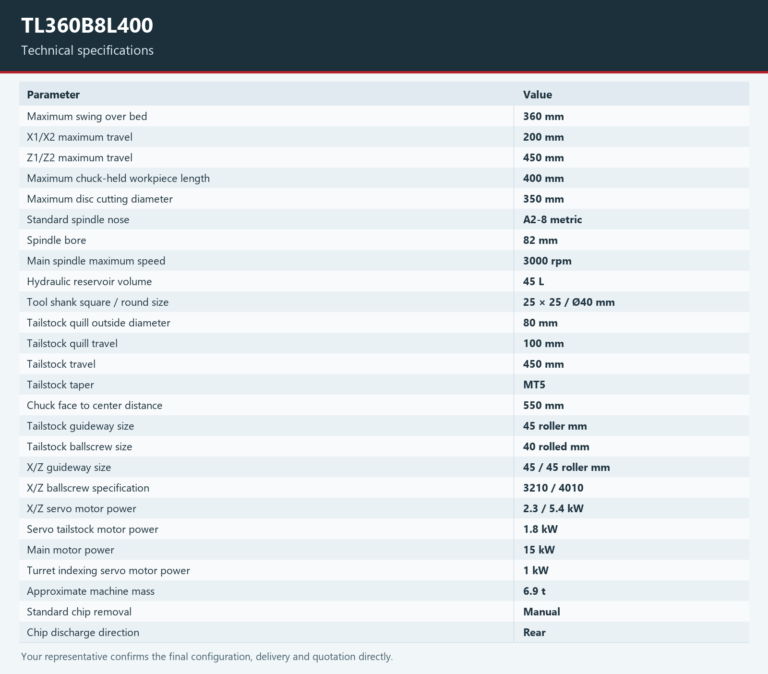
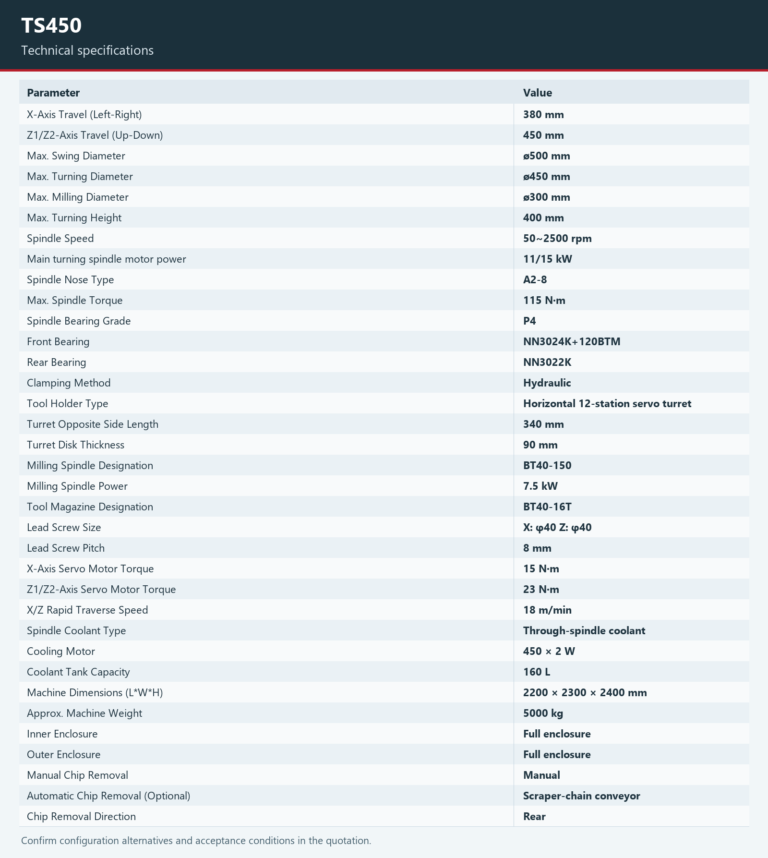
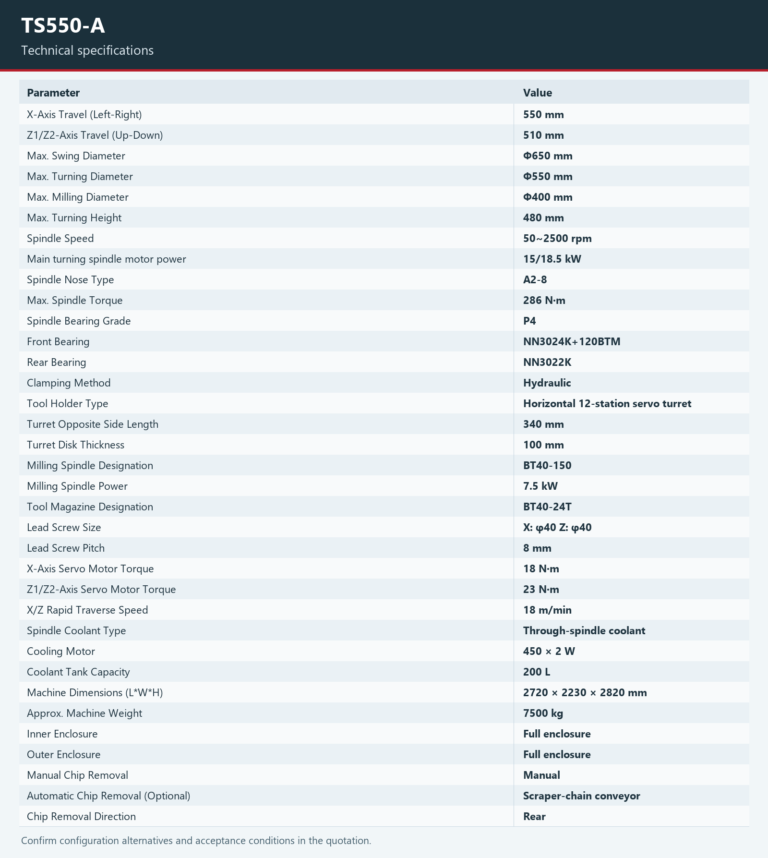
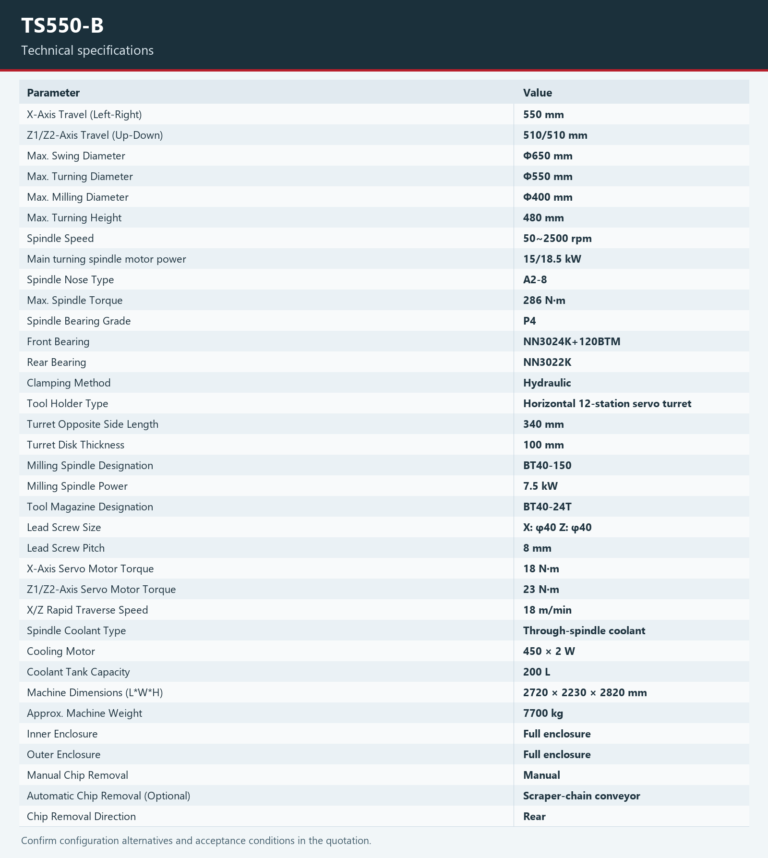
No. They are visual evidence for machine identity and context. Final specifications must come from the reviewed model source and quotation package.
Where can I compare model-specific turning dimensions?
For the published turning limits, compare TY1000 and TY1200. Review diameter, cutting height and workpiece weight separately, then confirm workholding and tool access for your part. Material and loading requirements still need engineering review.
Can Tiezheng review a part before a model is selected?
Yes. Start with the part dimensions, material and operations you already know. Choosing a model and providing a drawing are optional for the first message. Your representative can arrange a suitable channel for confidential drawings after initial contact.
Does this page claim a fixed certificate scope?
No. Compliance and documentation must be checked for the exact model, configuration and destination market.
TYY-1800 and TYY-2300 capacity comparison
For flange or disc turning, the Ø2000 mm label has different meanings in these TYY groups. On TYY-1800ATC and TYY-1800ATC+C it is the maximum swing diameter; their turning limit is Ø1800 mm. On TYY-2300ATC and TYY-2300ATC+C it is the table diameter; their turning limit is Ø2300 mm. Compare the surface to be turned, the rotating blank and the fixture separately; confirm the intended setup with engineering.
Maximum turning height is 1200 mm for both TYY-1800 models and 1600 mm for both TYY-2300 models. Maximum workpiece weight is 8000 kg and 10000 kg respectively; neither limit alone approves a flange, its fixture or its loading arrangement. This TYY table uses maximum turning height; the TY1000/TY1200 table retains maximum cutting height. Equal capacities and the +C suffix do not establish supplied tooling or milling functions. Confirm the complete configuration with engineering.
| Model | Table diameter (mm) | Maximum swing diameter (mm) | Maximum turning diameter (mm) | Maximum turning height (mm) | Maximum workpiece weight (kg) |
|---|---|---|---|---|---|
| TYY-1800ATC | Ø1600 | Ø2000 | Ø1800 | 1200 | 8000 |
| TYY-1800ATC+C | Ø1600 | Ø2000 | Ø1800 | 1200 | 8000 |
| TYY-2300ATC | Ø2000 | Ø2500 | Ø2300 | 1600 | 10000 |
| TYY-2300ATC+C | Ø2000 | Ø2500 | Ø2300 | 1600 | 10000 |